

I recently had an opportunity to share my opinion on a topic I feel pretty strongly about. Which, as you know, does not narrow down the options AT ALL.
Anyway, the crux of it is this: we do our children and ourselves a disservice with the cultural habit of limiting, or implying limits, when supplying the one line answer expected response to: “What do you want to be when you grow up?” and, “What do you do?” As if one line can sum up a life story or person’s identity.
None of us are, or should be, defined by a singular statement. (Giant asterisk here, footnote to follow.) Because there isn’t only one role or title worthy to claim as our entire identity. Life doesn’t work that way, nor should it.
Multiple Roles
In a few months, I’ll attend a luncheon for a regional Women in Print event. I’ll be among people fluent in different parts of the print industry from large-format signage to tiny, finely embellished labels.
There will be more mothers, grandmothers, sisters, and aunts in that room than at any other print meeting I attend. But just as many leaders, business owners, salespeople, and technical experts. Also: coaches, community volunteers, board members, and advocates. These are roles we have chosen, or been born into, or have sometimes stumbled into through other choices. And they are all a part of us.
But maybe more importantly, is the consequence of putting limitations on ourselves with one title or role.
Multiple Facet Life
For example, several years back I was chatting with my nephew about his life ambitions. He was eight or so at the time and thinking of being an architect or maybe picking up the guitar. You know, the age-old quandary: Engineer or Rock Star?
I said, “You don’t have to pick just one. You can be an engineer and a musician.”
I told him about a local band — all professionals by day: business owners, lawyers, and so on. Then at night, they play rock and roll; they’re really good, entertaining themselves and crowds of all sizes.
He said, “Huh. I didn’t know that.”
Guys, GUYS! A lot of people don’t.
More people need to acknowledge and give themselves permission to pursue (and proclaim) more than their work identity.
Enough
The mental block folks often hit: Are you “good enough” to claim that identity?
Are you not a “real” writer, or runner, or musician, or speaker until… what?
Until you win an award?
Until you get paid?
Until someone else says you are?
If you are writing, you are a writer. If you are running, or teaching, or speaking – you move the verb to noun and that’s you.
The truth is: the doing is the being.
And that’s what we should be teaching and modeling.
It’s not about waiting for validation.
It’s about giving yourself permission to be all that you are and even can be.
Which leads to my asterisk and footnote.
****
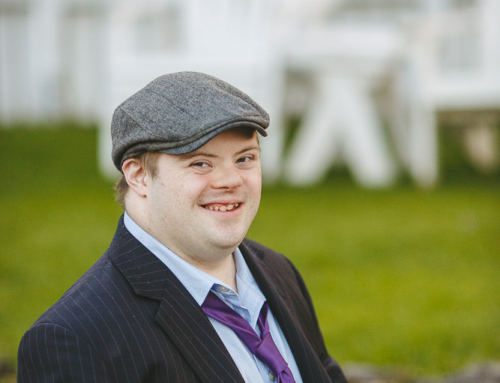
 My son Marcus is an adult with Down syndrome and he provided the perfect, and most succinct answer, to this question.
This is a extra short clip from what I wrote from that moment:
We were in the coffee shop when I asked him, “What do you want to be when you grow up?”
Marcus blinked once and said, “Myself.”
Somewhere in my brain I heard a snap. By Jove, he’s right! The majority of us with only 46 chromosomes tend to talk about being something, like some title or some job. “I want to be a manager,” “a chef,” “an artist.” Wouldn’t it be neat if, instead, we said to ourselves: “When I grow up, I’m going to be myself. The most true and best possible me.” Holy cow!
When Marcus was born, I was bombarded with strangers telling me what he would never do or could never be (a lot of baloney).
My job as a mother is to help Marcus become the best possible version of himself.
My job as a human is to become the best possible version of myself.
There is no one better than Marcus to teach me how to do that. When I vent to my husband about people’s actions I have seen or read, Marcus gently reminds me, “No one is perfect, Mom.”
When I don’t know what to say to a friend in pain, Marcus responds to them with only a hug. The best and right answer, of course.
When I’m too self-conscious to dance, he dances anyway.
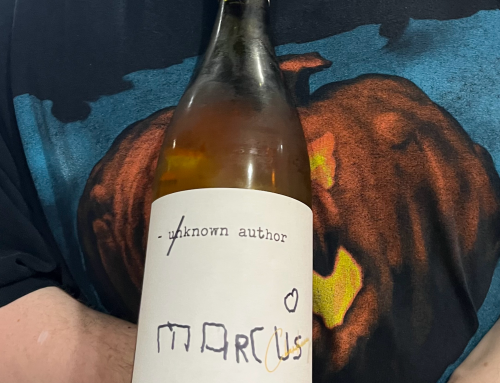
 Lately, Marcus has also taught me more about being an artist than any other book or class could. “Success” to him, in so much as he even consideres it, is about the process of creating, not necessarily in the acknowledgement from others. That is, of course, a whole ‘nother concept to tackle, so I’ll have to come back to that…
For now, How about you? What do you do? What are you going to be?


Leave A Comment